XRF Geochemical Fingerprinting: Bridging Laboratory Science and Field Traceability
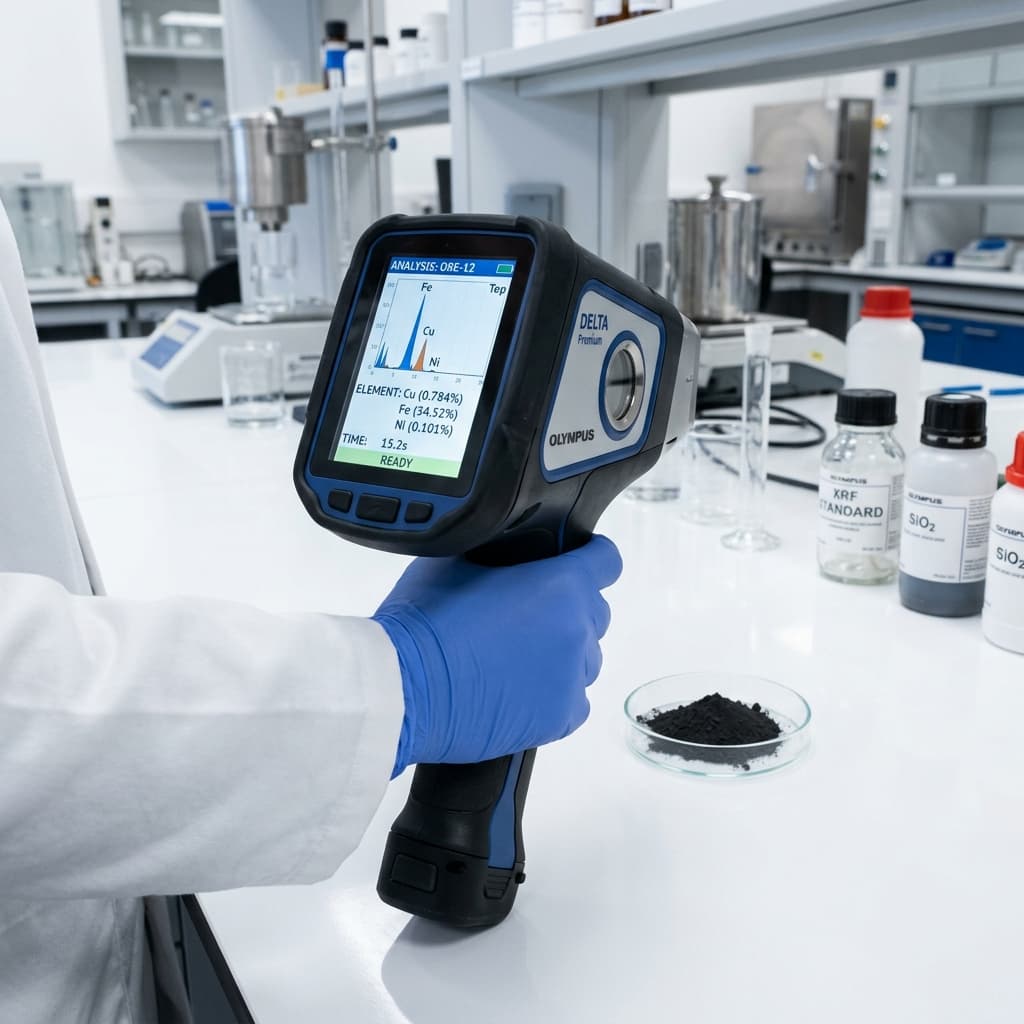
A methodological overview of how TraCerLab translates laboratory-grade geochemical analysis into a scalable, field-deployable mineral provenance verification system — co-developed with the partner Universities: University of Liège GeMMe Laboratory, ISP/Bukavu URSTIME Lab, and partner institutions.
The Science Behind the Fingerprint
Technical Note — TraCerLab Research Series, Vol. 1
Mineral provenance verification has long been the domain of academic geology laboratories with expensive instrumentation and lengthy analytical pipelines. TraCerLab's core scientific mission is to collapse this gap: to deliver laboratory-grade forensic confidence at field scale, in real time, at commercially viable cost.
The Geochemical Basis
Every mineral deposit carries a multi-element geochemical signature shaped by its geological formation history — the specific pressure, temperature, fluid chemistry, and tectonic context of its origin. This signature is expressed in the trace element and major/minor element concentrations measurable by X-ray fluorescence (XRF) spectrometry.
For coltan (Fe,Mn)(Ta,Nb)₂O₆), the key discriminating elements include:
| Element | Geological Significance |
|---|---|
| Nb, Ta | Pegmatitic vs. hydrothermal origin |
| W, Mo | Skarn vs. greisen association |
| Fe, Mn | Redox conditions during crystallisation |
| Pb, Bi | Post-magmatic fluid overprinting |
The combination of these ratios creates a multi-dimensional fingerprint that is statistically unique to geological deposit zones — in some cases discriminating between sites separated by as little as 3 kilometres.
Field Deployment Architecture
TraCerLab's portable XRF workflow is structured in three tiers:
Tier 1 — Field Screening (Handheld XRF) On-site measurement by trained field officers. Produces a 10-element screening profile in approximately 90 seconds per sample. Used for real-time anomaly detection and cooperative compliance verification.
Tier 2 — Regional Verification (Benchtop XRF) Samples flagged for verification are transported to regional laboratory nodes for 45-element analysis under controlled conditions. This produces the primary provenance fingerprint anchored to the blockchain record.
Tier 3 — Independent Validation (University Laboratory) A stratified random sample (approximately 3% of all certified bags) undergoes independent repeat analysis at the University of Liège GeMMe Laboratory or Institut Supérieur Pédagogique de Bukavu, providing ongoing statistical validation of the field methodology.
We are transparent about the current boundaries of the methodology. XRF is non-destructive but surface-sensitive; fine-grained mineral mixtures can complicate trace element attribution. Our research roadmap includes integration of portable laser ablation ICP-MS and PIXE for ambiguous cases.
For full methodology documentation and data access enquiries: mac.mugumaoderha@tracerlabgroup.com